Health and Safety Policy — Business Waste Removal Wanstead
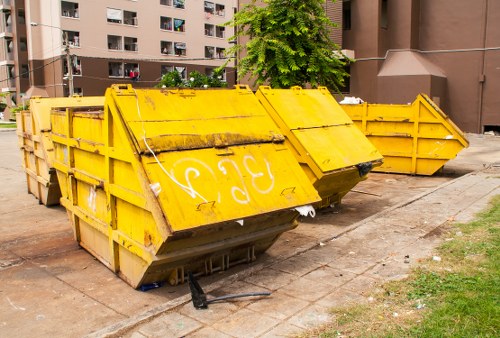 Business Waste Removal Wanstead is committed to protecting the health, safety and welfare of all employees, contractors and members of the public affected by our operations. This policy sets out the standards and responsibilities for safe working across our rubbish company service area and commercial waste collection activities. It applies to routine waste collections, commercial clearances, transfer operations and any on-site handling carried out by our teams.
Scope and Purpose
This policy defines how we manage risks associated with waste removal and rubbish collection across the service area. It is designed to ensure legal compliance and to promote best practice without over-referencing local legal details. The section below explains the practical measures we adopt to keep work safe, the expectations of employees and the role of management in upholding standards.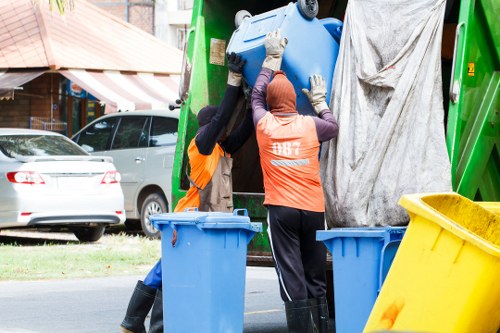 Responsibilities — Employers, managers, supervisors and operatives have distinct duties. Management shall ensure resources, training and supervision are provided. Employees must follow instructions, use personal protective equipment and report hazards promptly. Contractors engaged for specialised removal tasks will be required to demonstrate equivalent safety performance and cooperate with site-specific risk arrangements.
Risk Assessment and Control
We undertake systematic risk assessments for all activities including manual handling, vehicle movements, lifting, segregation of wastes and interaction with site personnel. Control measures follow the hierarchy of risk reduction: elimination, substitution, engineering controls, administrative controls and PPE. Assessments are recorded and updated whenever processes or conditions change, or when new information about hazards emerges.Key operational controls include vehicle checks, safe loading and unloading procedures, clear traffic management on sites, and segregation of materials to prevent contamination. Our rubbish company service area procedures require that hazardous items are identified and managed in accordance with accepted industry practice and manufacturer guidance, with clear labelling and containment as needed.

Training, Competence and Communication
All staff receive induction training covering safe systems of work, manual handling, incident reporting and safe driving for commercial waste collection. Refresher training is scheduled and records maintained. Supervisors conduct toolbox talks and briefings to reinforce safe methods and ensure that new tasks are supported by competent oversight. Communication channels exist for reporting close calls and hazards and for escalating concerns.Personal Protective Equipment (PPE) and welfare facilities are provided appropriate to the risk. Standard PPE includes high-visibility clothing, gloves, safety boots and suitable respiratory protection where dust or odour is present. Vehicle safety is emphasised: secure loads, periodic maintenance, tachograph and hours-of-service compliance and practical measures to prevent slips and falls during access to bins, skips and compactors.
Hazardous and special wastes are handled under controlled procedures. This includes containment, segregation and use of licensed carriers where required. Our teams follow clear protocols for chemical, asbestos-suspect materials and sharps encountered during clearances. Where required, we suspend operations and seek specialist removal to ensure safety and regulatory alignment.
Emergency preparedness covers spill response, first aid, fire safety and procedures for dealing with aggressive or unsafe site conditions. Contact with site owners and co-located workers is coordinated so that emergency arrangements are understood before work begins. Incident reporting is mandatory and near misses are investigated to prevent recurrence.

Monitoring, Audit and Continuous Improvement
We monitor performance through inspections, audits and review of incident data. Performance indicators include lost-time incidents, near-miss frequency, training completion rates and vehicle defect reports. Findings drive corrective actions and help inform updates to this health and safety policy to reflect evolving industry standards in waste removal Wanstead operations.Enforcement and disciplinary policies are applied consistently where unsafe practices persist. Positive reinforcement is used to recognize safe behaviour and contributions to improving workplace safety. Managers are accountable for ensuring that remedial actions are completed and that safety standards are maintained across the rubbish removal service area.
Policy Review and Acceptance
This policy is endorsed by senior management and is reviewed at least annually or after a significant incident, change in operations or legislative update. All employees and contractors are expected to familiarise themselves with the content, follow the procedures described and contribute to a safe working culture. Adherence to this policy is a condition of continued engagement with our business waste removal and commercial rubbish company services.Key Duties Summary:
- Management: provide leadership, resources and monitoring;
- Supervisors: ensure safe systems are followed and training delivered;
- Employees: work safely, use PPE and report hazards;
- Contractors: comply with site-specific safety arrangements.
This policy statement should be read alongside operational procedures and safe work method statements specific to each task within our rubbish company service area.
